Candide
Candide, ou l’Optimisme

First published AD 1759, written in French
Candide, ou l'Optimisme is a French satire written by Voltaire, a philosopher of the Age of Enlightenment, first published in 1759. The novella has been widely translated, with English versions titled Candidus: or, All for the Best (1759); Candide: or, The Optimist (1762); and Candide: Optimism (1947). A young man, Candide, lives a sheltered life in an Edenic paradise, being indoctrinated with Leibnizian optimism by his mentor, Professor Pangloss. This lifestyle is abruptly ended, followed by Candide's slow and painful disillusionment as he witnesses and experiences great hardships in the world. Voltaire concludes Candide with, if not rejecting Leibnizian optimism outright, advocating a deeply practical precept, "we must cultivate our garden", in lieu of the Leibnizian mantra of Pangloss, "all is for the best" in the "best of all possible worlds".
Draws on Gulliver's Travels.See Candide in its lineage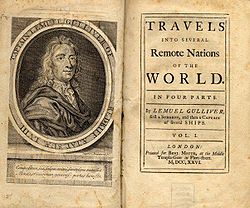


Your reading
Sign in to add this book to your map.
Where it is set


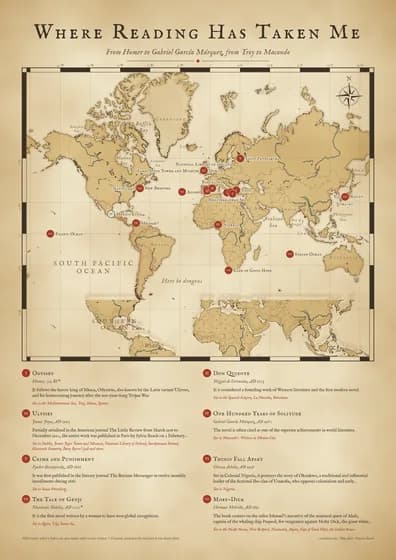 Put Candide on a mapAn engraved chart of every place it is set, to frame or to share. Add the other books you have read.
What it draws on
- Gulliver's Travels
Jonathan Swift, AD 1726
Voltaire knew Swift and his book from his years in England. Candide shares Gulliver's form, a naive traveller passing through absurd countries, and its target: a Europe that thinks itself reasonable.
Source: Wikipedia, Candide
“As evidenced by similarities between the two books, Voltaire probably drew upon Gulliver's Travels for inspiration while writing Candide.” Read it there
